After years of lean inventory discipline, supply chain disruptions have forced a fundamental rethink. The companies that survived the last three years of volatility share a common trait: they stockpile strategically.
Key Takeaways
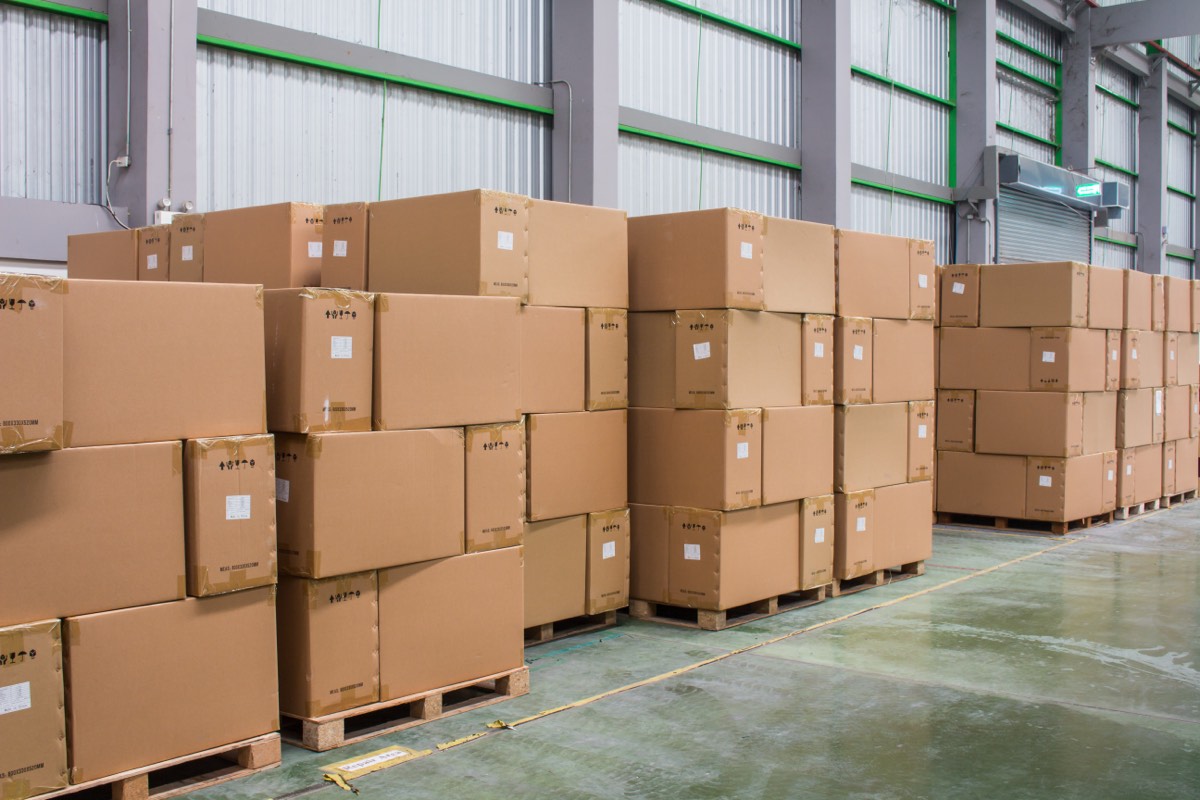
For three decades, just-in-time inventory management was treated as close to an operational law of physics: waste was the enemy, buffer stock was a symptom of poor planning, and the goal was to synchronize supply with demand so precisely that warehouses became throughput channels rather than storage facilities. That orthodoxy is now being systematically dismantled. Across Fortune 500 manufacturers, average inventory days on hand reached 47 days in 2026, up from 28 days in 2019, a 68% increase driven not by poor execution but by deliberate policy, according to analysis published in the Harvard Business Review's Q1 2026 operations management edition.
"We spent 30 years engineering waste out of our inventory positions," said the chief supply chain officer at a major North American industrial equipment manufacturer. "Then we spent three years learning, at enormous cost, exactly what we had engineered out along with the waste: resilience." The lesson took multiple forms across multiple industries, from automotive plants idled by single-source semiconductor shortages, to consumer goods companies that could not meet holiday demand because a port strike in a single geography halted 60% of their inbound volume.
Describing the shift as the "death of just-in-time" is accurate but incomplete. The more precise characterization is a bifurcation of inventory strategy by component risk profile. For commoditized, domestically sourced materials with multiple qualified suppliers and lead times under two weeks, lean inventory discipline remains entirely appropriate. Holding excess stock of steel rod, corrugated cardboard, or standard fasteners provides little resilience value while generating real working capital cost. The logic of JIT still holds in these categories.
The shift is concentrated in a different segment: components that are single-sourced or dual-sourced with limited substitution options, manufactured in geographically concentrated regions with high tariff or disruption exposure, and with long lead times that make reactive purchasing expensive or impossible. Semiconductors are the canonical example, but the category also includes specialty chemicals, rare earth-containing subassemblies, precision-machined components from specific geographic clusters, and pharmaceutical active ingredients. For these items, the risk-adjusted cost of carrying buffer stock is now broadly accepted as lower than the cost of a stock-out.
A 2025 McKinsey survey of 400 global manufacturing executives found that 71% have formally adopted a tiered inventory policy that applies different stocking targets to components based on a defined risk-and-criticality classification. That figure was 29% in 2021, before the full effects of the pandemic supply disruptions had worked their way through corporate strategy processes. The remaining 29% operating without formal tiering tend to cluster in smaller enterprises and in sectors, such as fresh food and highly perishable goods, where extended buffer stocking is operationally impractical.
"The CFOs who pushed back hardest on buffer stock investment in 2021 are the same ones who approved emergency air freight budgets in 2022 and 2023 that cost ten times what the inventory would have. The math is not complicated once you have lived through it." VP of Supply Chain Finance, Fortune 200 consumer electronics manufacturer
The shift away from pure JIT has not been accompanied, in well-run organizations, by a simple directive to hold more inventory. That approach, common in panic responses to disruption events, generates its own costs: excess working capital, warehouse capacity constraints, and inventory write-downs when demand signals shift or product specifications change. The more sophisticated approach applies a structured calculation methodology to determine component-specific buffer targets. The most widely adopted framework derives from the work of MIT's Center for Transportation and Logistics, which published an updated supply chain resilience model in 2024 incorporating three primary inputs: supplier risk score, demand volatility coefficient, and replenishment lead time variance.
In practice, companies executing this well are segmenting their component libraries into three or four tiers based on these inputs. Tier 1 components, those with the highest risk scores and longest lead times, are held at 60 to 90 days of buffer stock. Tier 2 components fall in the 30 to 45 day range. Tier 3 components, those with low risk and short lead times, are held at lean levels of 5 to 15 days. The weighted average inventory position across all tiers produces the aggregate days-on-hand figure reported in financial disclosures, which is why the Fortune 500 average of 47 days represents a midpoint across very different stocking policies for different parts of the same portfolio.
Warehouse capacity is the physical constraint that most often limits the buffer-stock ambition. The US industrial vacancy rate hit a record low of 3.8% in Q4 2025, according to CBRE's Industrial Market Report, driven simultaneously by nearshoring-related demand, e-commerce fulfillment requirements, and this exact trend toward higher inventory positions. Companies that locked in long-term warehouse leases in 2022 and 2023, when many peers were retrenching, now report that their ability to hold buffer stock is itself a competitive differentiator because they have the physical space to do it.
The cost objection to just-in-case inventory is legitimate. Carrying 47 days of inventory instead of 28 days requires roughly 68% more working capital tied up in stock, which at current financing costs represents a meaningful drag on return on invested capital. The companies managing this trade-off most effectively are using AI-driven demand forecasting to reduce the working capital penalty of higher inventory positions. The mechanism is not obvious but is straightforward once understood: better demand forecasting does not reduce the amount of buffer stock you need for disruption protection, but it does reduce the amount of cycle stock you hold unnecessarily due to demand uncertainty. The net effect is that total inventory can rise modestly while working capital impact is partially offset by leaner cycle stock management.
Platforms from vendors including o9 Solutions, Kinaxis, and Blue Yonder are now incorporating multi-signal demand sensing that ingests point-of-sale data, weather forecasts, social trend indicators, and macroeconomic leading indicators to produce rolling short-term demand forecasts with materially lower error rates than traditional statistical models. A 2025 Gartner study of 220 manufacturers using AI-enhanced forecasting found an average 23% reduction in forecast error at the SKU level, translating to a 14% reduction in cycle stock requirements. For a $10 billion manufacturer, that cycle stock reduction can offset a significant portion of the working capital cost of maintaining higher strategic buffer stock.
The just-in-case era is not a temporary overcorrection that will revert to lean orthodoxy once geopolitical conditions normalize. Supply chain leaders who have lived through the disruption cycles of the past six years are building organizations that treat resilience as a core design criterion alongside efficiency, not a feature toggled on in crisis and off in calm. The companies setting inventory strategy for the next decade are doing so with a clear-eyed understanding that the cost of being wrong in the direction of too little stock has, in modern operating conditions, consistently exceeded the cost of being wrong in the direction of too much.

Trade policy shifts, carrier consolidation, and nearshoring momentum are combining to redraw where goods move. Here is the current state of global freight flows and what comes next.
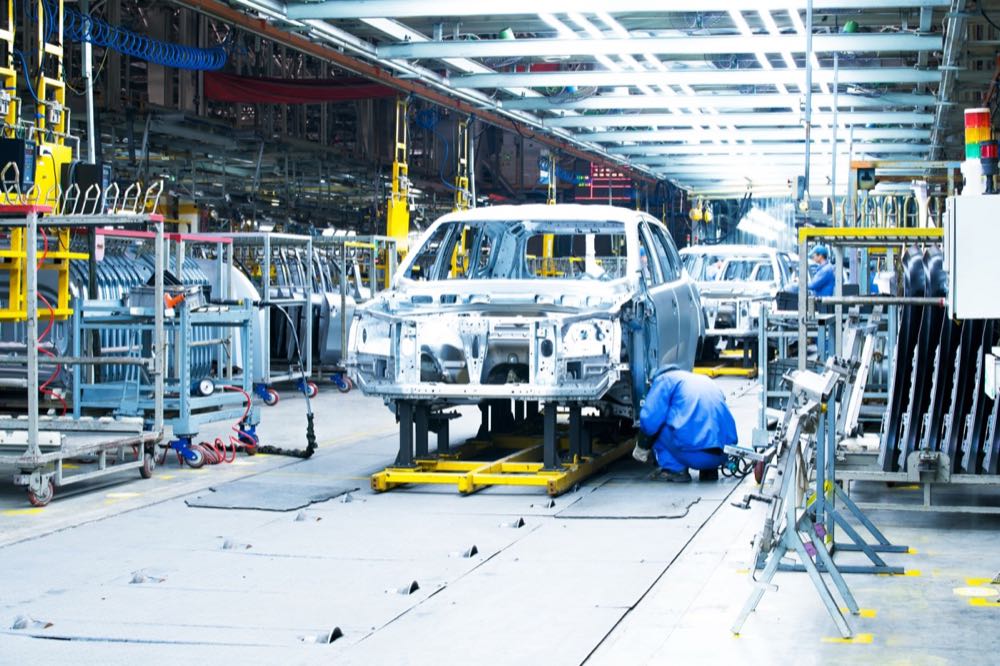
$890 billion in North American manufacturing investment is generating new freight corridors across the US-Mexico border faster than existing infrastructure can handle.

Early adopters of AI route optimization report fuel savings of 8 to 14%, but implementation failures are common. We examine what separates the successes from the setbacks.
